Advanced Fault Finding Strategies for Modern Engine Management Systems
Modern vehicles rely on highly sophisticated engine management systems that integrate sensors, actuators, control modules, and complex software strategies. While scan tools provide access to fault codes and live data, accurate engine management diagnostics now require deeper analytical skills.
Parts swapping and code clearing are no longer effective strategies. Instead, technicians must adopt structured, evidence-based approaches supported by advanced fault finding training.
Understanding Sensor Logic and System Strategy
Every engine management system operates using programmed logic. The Engine Control Module (ECM) constantly monitors inputs, compares them against expected values, and adjusts outputs accordingly.
To perform accurate diagnostics, technicians must understand:
- How sensors interact within the system
- What “normal” data patterns look like
- How the ECM responds to faulty or implausible inputs
- Which faults are primary and which are secondary
Primary vs Secondary Fault Codes
A common diagnostic mistake is treating all stored fault codes as equal. In reality:
- A failed crankshaft sensor may trigger multiple related codes.
- An intake air leak may create fuel trim, oxygen sensor, and misfire faults.
- A low system voltage condition can cause numerous communication errors.
Effective engine management diagnostics require identifying the root cause, not just the most visible symptom.
Interpreting Live Data Correctly
Scan tool live data provides valuable information, but only when interpreted in context.
Technicians should analyse:
- Fuel trims (short-term and long-term)
- Mass airflow (MAF) readings
- Manifold absolute pressure (MAP) values
- Oxygen sensor switching activity
- Engine load calculations
- Throttle position correlation
Rather than asking “Is this value within range?”, advanced diagnostics asks:
- Does this value make sense for current operating conditions?
- Does it correlate with other related sensor inputs?
- Is the ECM compensating for an underlying issue?
Structured analysis prevents misdiagnosis and unnecessary parts replacement.
Oscilloscope Usage in Modern Diagnostics
While scan tools display processed data, oscilloscopes reveal raw signal behaviour. This makes them essential for advanced fault finding.
An oscilloscope allows technicians to:
- Identify signal dropouts
- Detect voltage irregularities
- Analyse waveform patterns
- Confirm actuator control signals
- Diagnose intermittent faults
Common Oscilloscope Applications
1. Crankshaft and Camshaft Correlation
Scope testing can confirm:
- Correct timing alignment
- Signal integrity
- Synchronisation between sensors
This is critical when diagnosing:
- No-start conditions
- Intermittent stalling
- Timing chain stretch issues
2. Fuel Injector Analysis
Using current ramp analysis, technicians can detect:
- Internal injector faults
- Mechanical sticking
- Electrical circuit resistance issues
3. Ignition System Testing
Primary and secondary ignition waveforms can reveal:
- Coil breakdown
- Excessive resistance
- Combustion inefficiencies
These issues may not always trigger diagnostic trouble codes but can significantly impact performance.
Advanced fault-finding training builds confidence in oscilloscope setup, trigger selection, and waveform interpretation – skills essential for modern engine management diagnostics.
Moving From Guesswork to Evidence-Based Diagnostics
Evidence-based diagnostics follow a structured process:
- Confirm the customer complaint
- Perform a complete system scan
- Research known faults and technical information
- Analyse live data and system logic
- Test before replacing any component
- Verify the repair under real operating conditions
This method reduces:
- Repeat repairs
- Unnecessary parts costs
- Labour losses from misdiagnosis
The Cost of Assumptions
Replacing a sensor because a fault code is present does not confirm failure. Fault codes indicate:
- A parameter is outside expected limits
- A signal is implausible
- A circuit condition is abnormal
They do not automatically confirm a defective component.
For example:
- A lean condition may be caused by vacuum leaks, fuel delivery issues, or incorrect sensor data.
- A throttle position fault may stem from wiring resistance rather than the throttle body itself.
- A knock sensor code may result from engine mechanical noise, not sensor failure.
Only systematic testing confirms the root cause.
The Role of Advanced Fault Finding Training
As engine management systems evolve, training must go beyond basic scan tool operation.
Advanced fault-finding training develops:
- Deep understanding of system strategy
- Confident oscilloscope usage
- Logical diagnostic workflows
- Accurate data interpretation skills
- Reduced reliance on parts swapping
Technicians trained in structured methodologies consistently achieve:
- Higher first-time fix rates
- Improved workshop efficiency
- Greater diagnostic confidence
- Increased profitability
Modern engine management diagnostics demand analytical thinking supported by proper tools and training.
Building Diagnostic Precision in Your Workshop
Workshops that invest in advanced training gain a significant advantage in handling complex drivability, intermittent faults, and performance-related issues.
By combining:
- Sensor logic understanding
- Oscilloscope expertise
- Evidence-based diagnostic processes
Technicians can diagnose faults accurately and efficiently, even in highly integrated systems.
Shop AutoTech’s Diagnostics Training Manuals
If you want to strengthen your team’s engine management diagnostics skills, structured learning resources make all the difference.
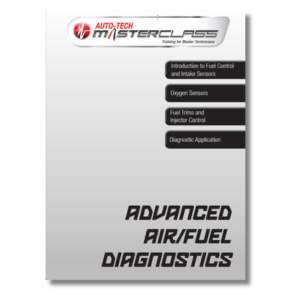
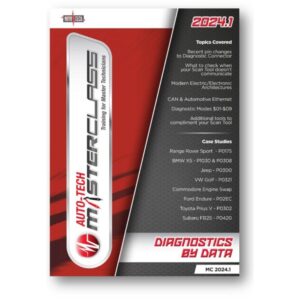
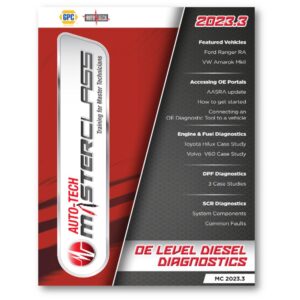
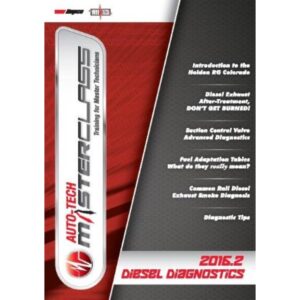
Explore AutoTech’s diagnostics training manuals and equip your workshop with practical, advanced fault-finding training designed for modern engine management systems.